Gasstations and ATEX
Receive a quote tailored to your needs
Before gas stations can be accessed, they must comply with ATEX 114 (Directive 2014/34/EU) and ATEX 153 (Directive 1999/92/EC). Note: The names ATEX 114 and ATEX 153 are considered ‘informal’ designations by the European Commission. The correct legal references are Directive 2014/34/EU and Directive 1999/92/EC.
Purpose of ATEX 114 and ATEX 153
The ATEX 114 Directive defines the requirements to meet the essential health and safety requirements (EHSR) for equipment (electrical and non-electrical) and protective systems used in areas or ‘zones’ where there is a risk of dust or gas explosions. In the Netherlands, this directive is part of the national legislation on explosive atmospheres and sets out the general safety objectives. Specific requirements are incorporated in European and international standards, such as EN-IEC 60079-0. In addition, ATEX 114 supports the free movement of goods within the EU for equipment and protective systems used in these environments.
The ATEX 153 Directive applies to the working environment, procedures and employee instructions (the ‘social directive’), both in explosive atmospheres. The purpose of this combination of directives is to ensure the safety and health of workers in areas with explosion risk.
ATEX regulation for gas stations
Accessible gas stations operated by network operators fall under ATEX legislation. A network operator must therefore address questions such as:
- Have explosion safety documents been prepared for all accessible gas stations?
- Have work instructions been established for various inspection activities (gas and electricity)?
- Is there a system in place for recording completed work (traceability)?
- Has ATEX zoning of the gas stations been correctly defined?
- Does the equipment in the gas stations comply with the applicable ATEX zone requirements?
If a network operator is unsure whether one or more of these aspects have been fully addressed, Kiwa can provide support through:
- A quickscan: assessment of ATEX compliance with identification of improvement points where necessary
- Advice on zoning in gas stations and ATEX qualification of (older) equipment
- Guidance on measures required to achieve full compliance with ATEX directives
- Preparation of required documentation tailored to the specific operational situation
- Advice on exceptional situations and new applications
Investigating accidents involving gas
A malfunction or defect in a gas installation or one of its components can have major consequences. These may include material damage, financial losses or in the most severe cases, personal injury. Careful investigation of such incidents is essential to determine the cause, prevent recurrence and establish liability. Kiwa supports clients with independent and technically in-depth investigations into accidents and failures involving gas installations.

Gas distribution safety
Gas distribution safety is currently a topic of high social interest. Organisations such as the supervisory bodies, the Dutch Energy Council and the Dutch National Mines Inspectorate explicitly hold network operators accountable for their responsibilities in ensuring safe gas distribution.
Accidents and Incidents Analysis
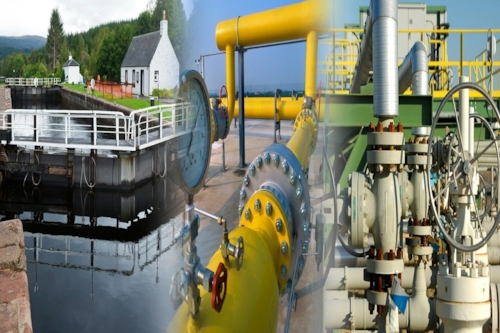
The independent investigation of incidents enables them to be used objectively as lessons to be learnt for the future. By learning from incidents, the correct measures can be taken to reduce these. For gas network operators in the Netherlands, Kiwa Technology provides a call-out service that can be reached 24/7.
Explosion Safety
Any company where flammable substances are transported, stored and used is required under occupational health and safety legislation to have a policy in place to protect employees against explosion risks. Kiwa has many years of experience in the field of gas and therefore possess in-depth knowledge of the properties of different gases, their various applications, and the associated risks.